

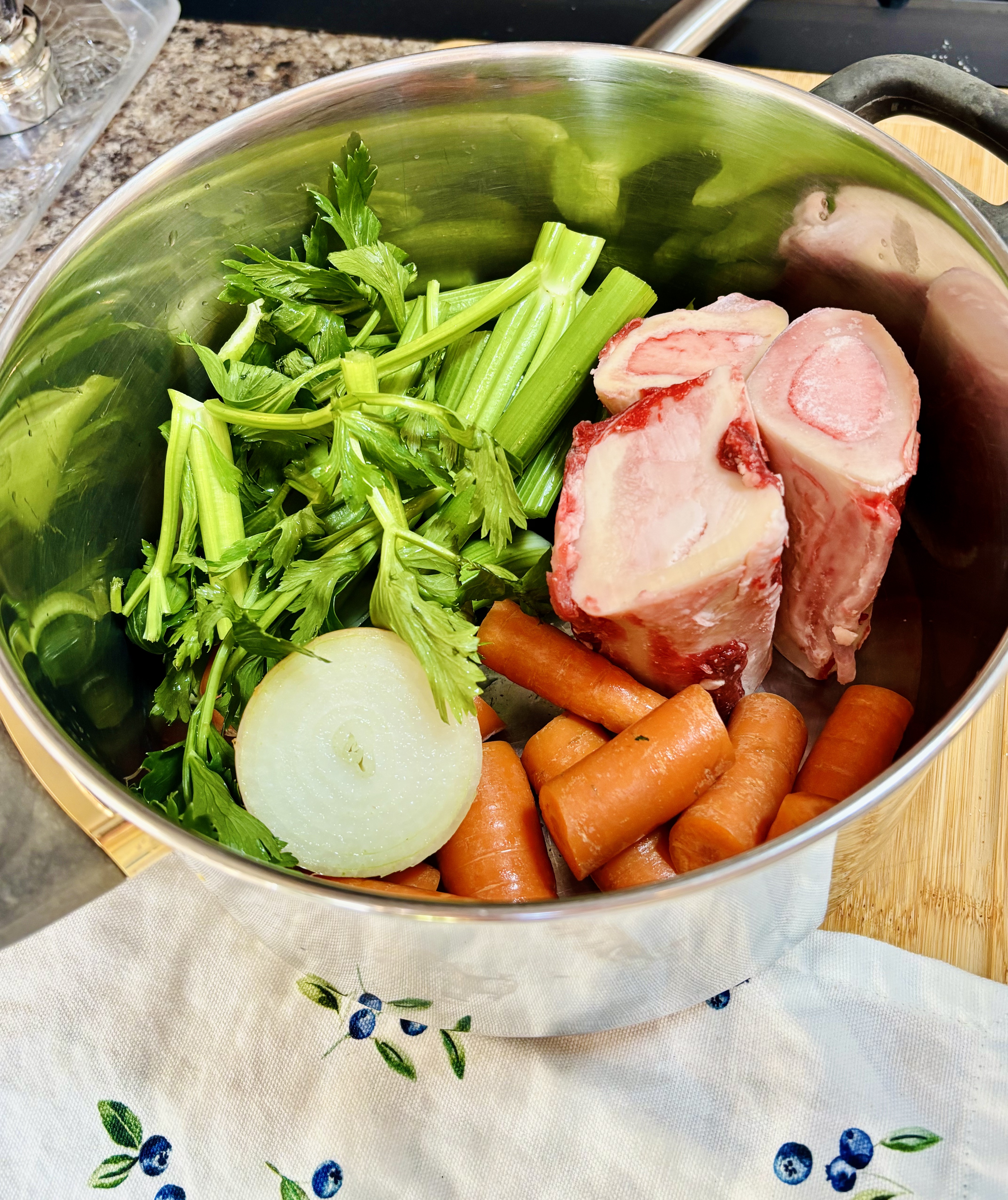
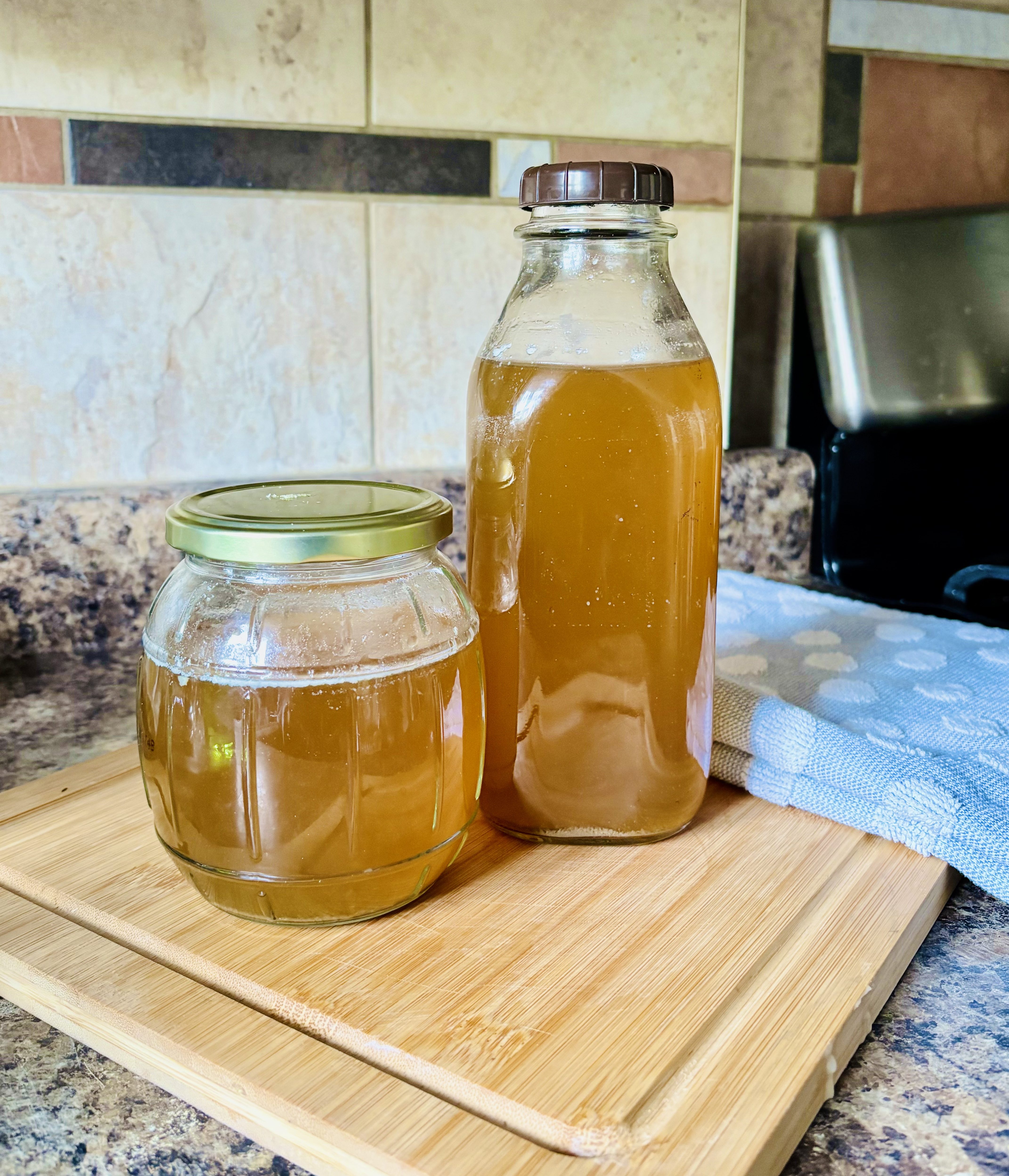
There is something special about a pot of homemade broth slowly simmering on the stove. Made with beef bones, a handful of vegetables, garlic and fresh herbs, this recipe is simple, comforting and a wonderful way to make more use of ingredients you already have in the kitchen.
For generations, cultures around the world have used bones, marrow and organ meats as part of traditional cooking. From European stocks and broths to Asian soups and Indigenous food traditions, making use of the whole animal was a practical way to reduce waste, stretch ingredients and provide nourishment. Bones were slowly simmered to create rich, flavourful broths, while organ meats offered concentrated sources of essential nutrients. Today, these traditional practices remind us of the value of making the most of our ingredients and returning to simple, resourceful ways of cooking.
Beef bone broth is a staple worth keeping on hand. It adds depth of flavour to soups, stews and sauces, and can be enjoyed on its own in a warm mug. With just a few simple ingredients and a little time, you can make a batch at home to enjoy throughout the week or freeze for later.
Bone broth contains protein, including gelatin derived from collagen in the bones and connective tissue. The amount varies depending on the bones used and how long the broth is simmered. While it is not a replacement for a balanced meal, it is a lovely addition to everyday home cooking.
There are many ways to enjoy nutritious bone broth:
- Enjoy by the mug: Warm a cup on the stove and season with salt and freshly cracked black pepper.
- Make a hearty soup: Use as the base for homemade vegetable, beef or noodle soup.
- Add depth to your cooking: Use in stews, braised meats, gravies and sauces.
- Cook your grains: Replace water with broth when cooking rice, barley or other grains.
- Make a comforting risotto: Use warm broth to gradually cook the rice and build flavour.
Nourishing Beef Bone Broth
Servings: 1.5-2 L
Prep Time: 15 minutes
Cook Time: 8 – 12 hours
Ingredients
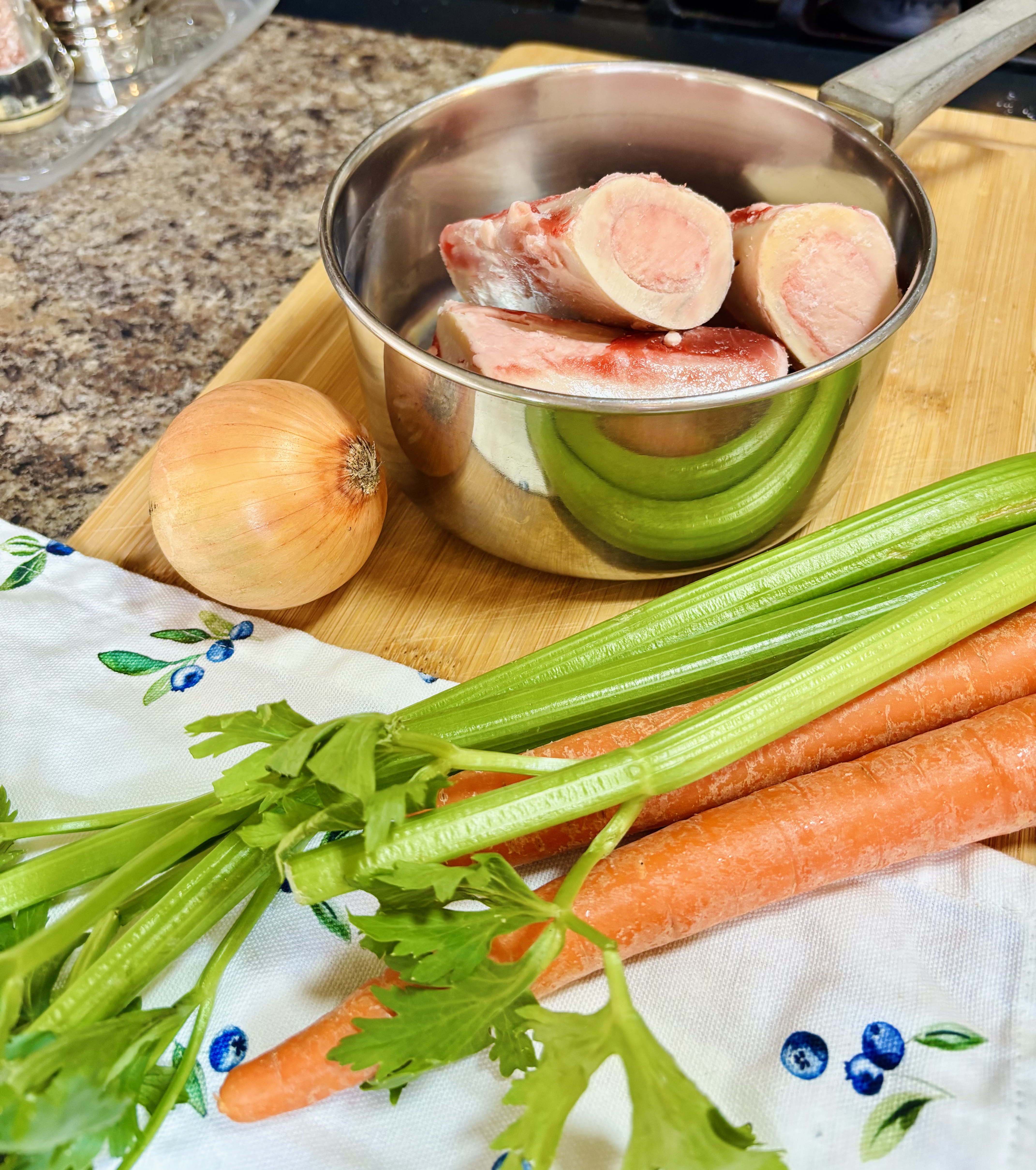
- 1 kg beef soup bones
- 2 medium carrots, roughly chopped
- 2 celery stalks, roughly chopped
- 1 medium onion, quartered
- 4 garlic cloves, lightly crushed
- 2 tbsp apple cider vinegar
- 2–3 L cold water, or enough to cover the bones
- A handful of fresh parsley (optional)
- Salt, to taste (optional; preferably season after straining)
Instructions
Stove Top Method
- Prepare the bones. Rinse the beef soup bones under cold water. If desired, blanch them in boiling water for 5–10 minutes, then drain and rinse. This helps remove some impurities for a cleaner-tasting broth.
- Add ingredients to the pot. Place the beef bones in a large stockpot. Add the carrots, celery, onion, garlic and apple cider vinegar.
- Add cold water. Pour in approximately 2–3 L of cold water, ensuring the bones are covered. Let the mixture sit for approximately 20–30 minutes before heating.
- Bring to a gentle boil. Slowly bring the pot to a boil over medium-high heat. Once boiling, reduce the heat immediately to maintain a gentle simmer.
- Skim the surface. During the first 30–60 minutes, skim off any foam or impurities that rise to the surface.
- Simmer slowly. Cover partially and simmer on low heat for approximately 8–12 hours. Check periodically and add hot water if necessary to keep the bones submerged.
- Add parsley. If using fresh parsley, add it during the final 30–60 minutes of cooking for a fresh herbal flavour.
- Strain the broth. Remove the bones and vegetables. Pour the broth through a fine-mesh strainer into a large heat-safe container.
- Cool and store. Allow the broth to cool promptly in shallow containers or an ice bath before refrigerating. Once chilled, skim off any solidified fat from the surface if desired.
Slow Cooker Method
- Prepare the bones. Rinse the beef soup bones under cold water. Blanching is optional but can help produce a cleaner-tasting broth.
- Add the ingredients. Place the bones in your slow cooker. Add the carrots, celery, onion, garlic and apple cider vinegar.
- Add water. Pour in enough cold water to cover the bones, making sure not to exceed the maximum fill line of your slow cooker.
- Cook slowly. Cover and cook on LOW for approximately 12–18 hours. Avoid lifting the lid frequently to maintain a consistent temperature.
- Add the parsley. If desired, add fresh parsley during the final 30–60 minutes of cooking.
- Strain and cool. Remove the bones and vegetables, then strain the broth through a fine-mesh sieve. Transfer to shallow containers and cool promptly before refrigerating.
Tips for Success
- Choose bones with connective tissue. Soup bones containing marrow, cartilage and connective tissue are ideal for making a rich broth. Knuckle and joint bones are particularly good options.
- Keep the heat low. A gentle simmer is all you need. Avoid vigorously boiling the broth, as this can make it cloudy.
- Don’t skip the apple cider vinegar. The acidity helps create the conditions for minerals to be released from the bones, although the amount of minerals in the finished broth will vary.
- Let time do the work. A longer cooking time helps develop a deeper flavour and allows collagen-rich connective tissue to break down into gelatin.
- Save the fat, if you like. Once refrigerated, the fat will solidify on the surface. You can remove it for a leaner broth or save it separately for cooking. For example, you can render beef tallow from your beef broth.
Does Bone Broth Need to Cook for 24 Hours?
You may come across bone broth recipes that recommend simmering for 12, 24 or even 48 hours. The difference largely comes down to the types of bones used, the desired flavour and how concentrated you want your broth to be.
A longer cooking time allows more collagen-rich connective tissue to break down into gelatin, which can give the broth a richer texture and help it develop a natural gel when refrigerated. However, longer cooking does not necessarily mean a more nutritious broth. Protein and mineral content depend on several factors, including the bones, water ratio and cooking conditions.
For this recipe, 8–12 hours on the stovetop or 12–18 hours in a slow cooker is a good starting point for developing a rich, flavourful broth using beef soup bones. If you prefer a more concentrated broth or are using larger, connective-tissue-rich bones, you can extend the cooking time.
There is no need to aim for 24 hours simply because a recipe recommends it. A well-made broth is about the ingredients, gentle heat and time needed to develop the flavour you enjoy.
Discover more from Flourish with food
Subscribe to get the latest posts sent to your email.


